
By John Burroughs June 14, 2026
A chargeback is a payment dispute process that allows a cardholder to challenge a credit card or debit card transaction through the issuing bank.
If the bank accepts the dispute, the transaction amount may be pulled back from the merchant account while the claim is reviewed. The merchant may also pay chargeback fees, and the dispute may affect the business’s chargeback ratio.
Chargebacks were designed as a consumer protection tool. They help cardholders respond to unauthorized transactions, billing errors, goods not received, services not provided, or purchases that do not match what was promised.
Consumer agencies such as the Federal Trade Commission and the Consumer Financial Protection Bureau provide educational guidance for consumers on disputing credit card charges.
For merchants, chargebacks are different from refunds, voids, reversals, payment declines, customer complaints, and ACH returns. A refund is usually initiated by the business after a sale has settled.
A void cancels a transaction before settlement. A payment decline happens before approval. A customer complaint may never become a formal dispute. An ACH return applies to bank-account payments rather than card network disputes.
Chargebacks involve several parties. The cardholder starts the dispute with the issuing bank. The issuing bank reviews the claim and sends it through the card network. The acquiring bank and payment processor notify the merchant. The merchant then decides whether to accept the dispute or submit evidence through representment.
For a simple overview of how payment reversals differ from merchant-initiated refunds, see this guide to payment reversals and how they work. Merchants who understand this difference can avoid treating every customer issue the same way.
Why Understanding Chargeback Reasons Matters
Understanding common chargeback reasons helps businesses identify why customers dispute card payments and what can be done to reduce preventable losses. Chargebacks can result from real fraud, customer confusion, shipping problems, poor documentation, refund delays, recurring billing misunderstandings, duplicate billing, processing errors, or first-party misuse.
For ecommerce sellers, the most common reasons for chargebacks often involve card-not-present fraud, product not received chargebacks, product not as described disputes, and billing descriptor confusion. A customer may not recognize the merchant name on their card statement, forget a purchase, or claim that the package never arrived.
For restaurants and retail shops, chargebacks may involve incorrect transaction amounts, missing receipts, duplicate billing, tip adjustment confusion, or card-present transactions where the customer later claims the charge was unauthorized. A signed receipt, itemized ticket, POS system record, and authorization code can help explain what happened.
For service providers, repair shops, contractors, consultants, and professional services firms, disputes often involve services not provided, customer dissatisfaction, unclear deliverables, cancellation disagreements, or claims that the service did not match expectations.
Written agreements, service records, photos, appointment logs, and customer messages can be important.
For subscription businesses, chargeback reasons often involve recurring billing, free trial conversion, cancellation policy confusion, refund not processed claims, or customers who forgot they agreed to automatic payments. Clear terms, reminder emails, cancellation logs, and billing records can reduce preventable disputes.
Chargebacks also affect more than one transaction. A high chargeback ratio can lead to closer risk monitoring by a payment processor, acquiring bank, or card network. It may also increase operational workload for finance teams, customer support teams, and reconciliation staff.
How Chargeback Reason Codes Work
Chargeback reason codes are labels used by card networks and payment providers to categorize transaction disputes. They help explain whether a dispute is related to fraud, authorization, processing errors, consumer dissatisfaction, goods not received, services not provided, recurring billing, or another issue.
Reason codes are useful, but they do not always tell the full story. A dispute may be coded as an unauthorized transaction, even if the real cause is billing descriptor confusion.
A product not received dispute may actually be caused by poor delivery communication. A customer dissatisfaction dispute may be linked to unclear product descriptions or expectations set during checkout.
Different card networks use different coding structures. Some group disputes into broad categories such as fraud, authorization, processing error, and consumer dispute.
Others use more detailed codes for recurring billing, cancelled services, duplicate processing, merchandise not received, or credit not processed. Educational dispute resources from card networks, such as merchant dispute management guidance, show how detailed these workflows can become.
Merchants typically receive reason code information through their payment processor, acquiring bank, payment gateway, merchant portal, or chargeback management platform. The notice may include the dispute amount, reason code, transaction date, deadline, cardholder claim, and evidence requirements.
A reason code should guide the merchant’s response. For example, a fraud claim may require proof of customer authentication, AVS, CVV, 3D Secure data, IP address, delivery confirmation, or prior undisputed transactions.
A product not received claim may require shipping confirmation, tracking number, signed delivery, or customer pickup records.
What reason codes can and cannot tell you
Chargeback reason codes tell merchants how the dispute was categorized, but they do not always prove what actually happened. A cardholder may choose a dispute category through an online banking portal, and the issuing bank may translate that claim into a network reason code.
That means merchants should avoid relying only on the label. Review the full transaction history, customer profile, order notes, support tickets, shipping timeline, refund requests, and payment authorization data. The reason code is a starting point, not the whole investigation.
For example, a “product not received” dispute may involve a package delivered to the correct address but stolen after delivery. A “fraud” dispute may involve a family member using the card. A “credit not processed” dispute may happen because the refund was issued but had not yet appeared on the customer’s account.
Fraud-Related Chargeback Reasons
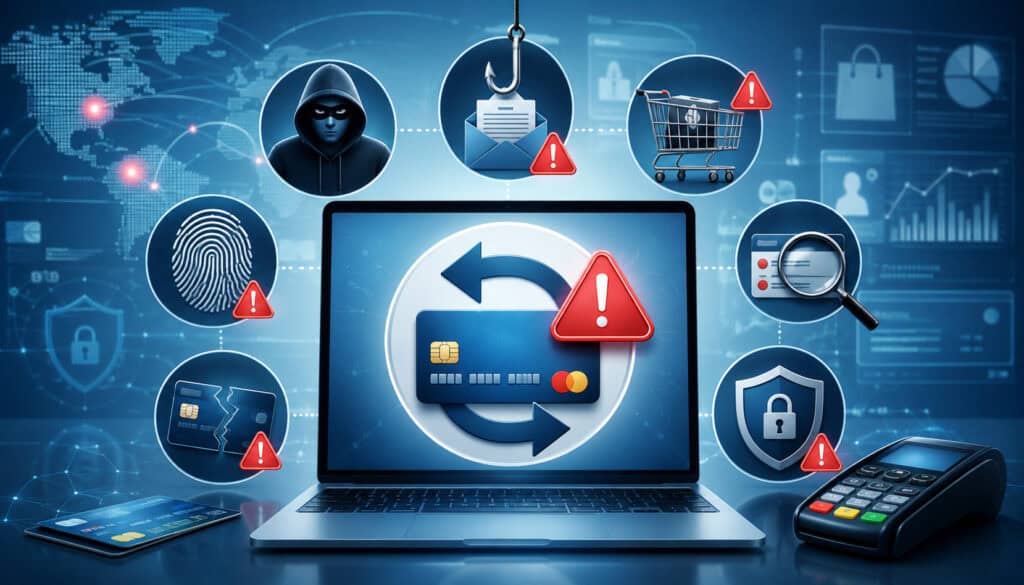
Fraud-related chargeback reasons are among the most common chargeback reasons for ecommerce payments and other card-not-present transactions.
These disputes usually claim that the cardholder did not authorize the transaction. The cardholder may say the card was stolen, account information was compromised, or someone else used the payment credentials.
Fraud chargebacks can involve genuine criminal activity, account takeover, stolen card data, synthetic identity fraud, triangulation fraud, or unauthorized purchases by someone close to the cardholder.
They can also overlap with friendly fraud chargebacks, where the cardholder or someone in the household did receive the goods or services but later disputes the charge.
Fraud prevention tools can reduce risk, but they cannot eliminate every dispute. Merchants should use layered controls such as AVS, CVV, device fingerprinting, velocity checks, fraud scoring, 3D Secure, tokenization, encryption, and PCI compliance practices.
The PCI Security Standards Council provides standards and resources for protecting payment card data, and its overview explains that PCI requirements apply to organizations that store, process, or transmit cardholder data.
Fraud-related merchant chargeback reasons should be reviewed by order value, product category, shipping speed, billing and shipping mismatch, IP address location, failed verification attempts, and customer history. High-value goods, digital products, rush shipping, and reshipment requests may require extra review.
Unauthorized transaction claims
An unauthorized transaction claim means the cardholder says they did not approve the payment. This is one of the most common credit card chargeback reasons and can appear in both card-present and card-not-present environments.
For ecommerce sellers, useful evidence may include AVS and CVV match results, IP address, device data, account login history, order confirmation emails, delivery tracking, signed delivery, and prior purchases from the same customer.
For retail stores and restaurants, useful records may include EMV chip data, signed receipts, POS system logs, transaction receipt copies, and authorization codes.
Unauthorized transaction disputes can be difficult because the merchant may have fulfilled the order properly but still face a fraud claim. That is why prevention is critical. A payment gateway that flags unusual transactions, mismatched customer information, or repeated failed attempts can help merchants review risky orders before shipping.
Lost or stolen card fraud
Lost or stolen card fraud happens when someone uses a physical card or stolen payment credentials without the cardholder’s permission. In card-present transactions, EMV chip acceptance can help reduce counterfeit card risk, but merchants still need proper staff training and POS system procedures.
In card-not-present transactions, stolen card fraud may appear as a normal online order. Red flags can include multiple failed payment attempts, several orders using different cards from the same IP address, rush shipping, billing and shipping address mismatch, high-value items, or orders sent to freight forwarders.
Restaurants, mobile merchants, and retailers should also pay attention to manual entry transactions. Keyed transactions can carry more risk than properly dipped, tapped, or inserted card payments because the physical card interaction may not be captured in the same way.
For merchants, evidence may include the transaction receipt, authorization record, POS system data, delivery records, and customer identity verification steps. Even when evidence is strong, outcomes can vary by network rules and issuer review.
Authorization and Processing Error Chargebacks
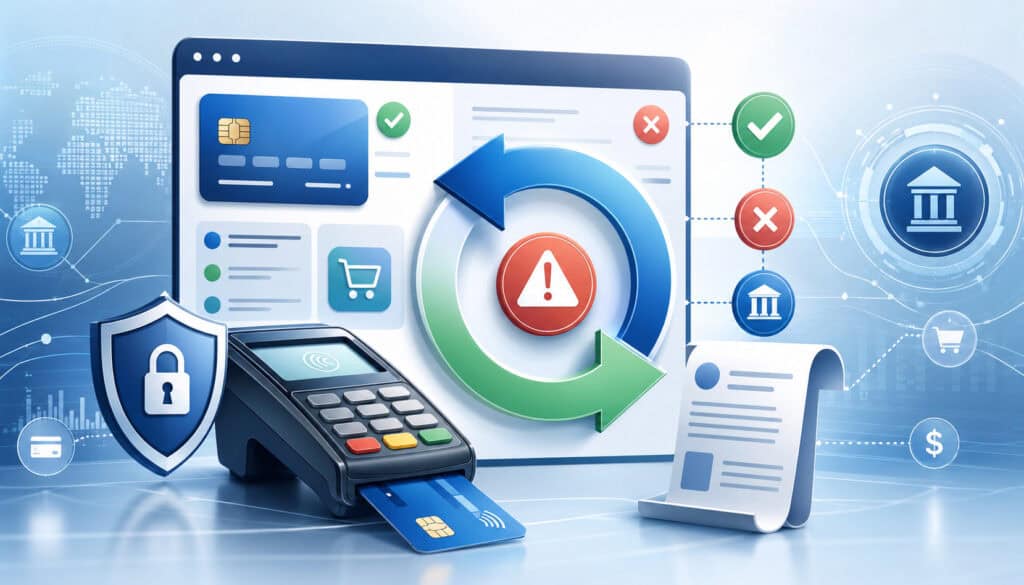
Authorization and processing error chargebacks happen when something goes wrong during payment approval, capture, settlement, or transaction handling. These are often preventable because they can result from staff mistakes, POS system issues, duplicate batches, incorrect manual entry, expired authorization, or settlement errors.
Authorization chargebacks may occur if a merchant processes a transaction without proper approval, captures an amount greater than authorized, uses an expired authorization code, or forces a transaction after a decline. Restaurants, lodging, rental, service, and delivery businesses may face extra risk when the final amount differs from the original authorization.
Processing error chargebacks can involve duplicate billing, incorrect transaction amount, paid by other means, late presentment, or credit not processed. These disputes may be less about customer dissatisfaction and more about the transaction record itself.
A good payment reconciliation process can reduce these issues. Merchants should compare POS system data, payment gateway records, batch reports, settlement deposits, invoices, refunds, and accounting entries. Staff should be trained not to re-run a card without checking whether the first attempt was approved.
Authorization errors
Authorization errors occur when the transaction does not follow expected approval rules. For example, a business may complete a sale after receiving a decline, manually enter a transaction without proper authorization, or capture a transaction after the authorization window has passed.
Service businesses and restaurants should be especially careful with adjusted amounts. If tips, add-ons, deposits, or final invoices change the total, the merchant should follow its processor’s rules for incremental authorization or final capture. A mismatch between the authorized amount and final charge can create dispute risk.
Useful evidence may include the authorization code, transaction timestamp, receipt, invoice, signed agreement, POS system record, and settlement details. Still, the strongest strategy is prevention: make sure employees understand declines, partial approvals, voids, reversals, and when a transaction should be reauthorized.
Processing error chargebacks
Processing error chargebacks happen when the cardholder claims the transaction was processed incorrectly. Common examples include duplicate billing, incorrect amount, paid by cash or check, refund not processed, or a transaction that should have been voided.
These disputes can affect retail shops, restaurants, repair businesses, professional services, and ecommerce sellers. A customer may see two similar charges and believe they were billed twice. Another may receive a refund receipt but not understand that card credits can take time to appear.
Evidence may include receipts, batch records, refund confirmations, invoice records, register logs, and customer messages. If the merchant made an error, accepting the dispute may be appropriate. If the dispute is incorrect, clean documentation helps explain what happened.
Product Not Received or Service Not Provided Disputes

Product not received chargebacks and service dispute chargebacks happen when the customer claims they paid but did not receive what they purchased. These payment dispute reasons are common for ecommerce stores, delivery-based businesses, digital sellers, event providers, repair shops, contractors, and professional services.
For ecommerce sellers, goods not received disputes often involve shipping delays, missing tracking, porch theft, wrong address entry, split shipments, backorders, or unclear delivery updates. Customers may file a chargeback if they cannot reach customer support or if they feel the merchant is not responding.
For service providers, services not provided disputes may involve missed appointments, incomplete work, unclear project scope, delays, or disagreement over whether the service was completed. Documentation is especially important when the “deliverable” is not a physical product.
Merchants can reduce these disputes through clear checkout timelines, shipping confirmation, delivery tracking, pickup confirmation, appointment reminders, service completion forms, signed work orders, and proactive communication. If delays occur, customers should hear from the business before they feel forced to contact their bank.
Goods not received
Goods not received disputes usually mean the customer says an item never arrived. This can happen even when the merchant shipped the order on time. The package may be delayed, lost, delivered to the wrong location, stolen after delivery, or shipped without enough tracking detail.
Useful evidence includes shipping confirmation, carrier tracking, delivery date, delivery address, signature confirmation, pickup confirmation, packing slips, and customer communication. For high-value shipments, signature requirements and insured delivery can help reduce risk.
Ecommerce sellers should avoid vague shipping promises. Instead of saying “fast shipping,” provide estimated handling time, carrier method, tracking updates, and what customers should do if a package is delayed. A customer who understands the timeline is less likely to panic and file a transaction dispute.
Services not provided
Services not provided disputes happen when a cardholder says the merchant failed to deliver the service purchased. This may involve repairs, consulting, cleaning, coaching, home services, event services, maintenance, software setup, professional services, or appointments.
Unlike physical goods, service delivery can be harder to prove. A signed receipt alone may not be enough to show that the work was completed as promised. Merchants should keep appointment confirmations, signed agreements, before-and-after photos, work logs, project milestones, completion approvals, customer emails, and call notes.
For B2B sellers and professional services firms, written scopes of work are critical. If a client disputes a charge because expectations changed, the merchant can refer to the original agreement, change orders, approval records, and delivery documentation.
Product Not as Described, Quality, and Customer Satisfaction Disputes
Product not as described, quality, and customer satisfaction disputes happen when the customer says the purchase did not match expectations. These are common reasons for chargebacks in ecommerce, retail, service, repair, and custom-order businesses.
A product not as described dispute may involve size, color, model, features, materials, compatibility, condition, or missing parts. A customer dissatisfaction dispute may involve a product that worked but did not meet subjective expectations. Damaged goods disputes may involve shipping damage, packaging problems, or defects discovered after delivery.
For service businesses, quality disputes may involve work that the customer believes was incomplete, late, poorly performed, or different from what was promised. In these cases, customer communication and written expectations matter as much as payment records.
Merchants can reduce these disputes by improving product descriptions, displaying accurate photos, listing dimensions, clarifying exclusions, documenting service scope, showing refund policy terms before checkout, and responding quickly when customers report issues.
Product not as described
Product not as described disputes are often preventable. They usually occur when there is a gap between what the customer thought they were buying and what was delivered. This gap may come from vague descriptions, outdated photos, missing compatibility details, unclear sizing, or overpromising.
Ecommerce sellers should include accurate product titles, images, technical specifications, condition notes, delivery contents, warranty details, and return instructions. Retail shops should make sure special orders, final sales, and custom products are clearly documented on receipts or invoices.
Evidence may include the product listing, checkout page, order confirmation, photos of the shipped item, customer messages, and return policy. If the customer received exactly what was described, this documentation can support representment.
For more background on responding to disputes with supporting documentation, this guide on chargeback representment explains how evidence can be organized around the reason code.
Damaged goods and customer dissatisfaction
Damaged goods disputes can involve products that arrived broken, defective, incomplete, or unusable. Customer dissatisfaction disputes can be broader and may involve expectations, service quality, or frustration with support.
Merchants should separate legitimate product issues from vague dissatisfaction. If the product was damaged in transit, a refund, replacement, or carrier claim may be the right path. If the customer used the product and later disputed the charge without returning it, the merchant may need transaction records, product details, and customer communication.
Service businesses should document customer approvals at key points. A repair shop might keep diagnostic approvals, parts authorization, photos, and final pickup signatures. A professional services firm might keep project milestones, revision requests, and delivery confirmations.
Subscription, Recurring Billing, and Cancellation-Related Chargebacks
Subscription payments create unique chargeback risks because customers may forget the billing schedule, misunderstand trial terms, overlook renewal notices, or believe they cancelled when the business has no cancellation record.
These recurring billing disputes can affect software providers, membership businesses, service plans, box subscriptions, coaching programs, maintenance plans, and digital content sellers.
Subscription chargeback reasons often include unauthorized transaction, recurring billing cancelled, credit not processed, services not provided, or customer dissatisfaction. The reason code may not always reveal whether the real issue was billing confusion, failed cancellation communication, or friendly fraud.
Recurring billing should be transparent from the beginning. Merchants should show the billing amount, billing frequency, trial terms, renewal date, cancellation policy, refund policy, and customer support contact before checkout. Confirmation emails should repeat the key terms.
Finance teams should reconcile recurring billing batches carefully. Failed payment retries, plan upgrades, prorated charges, annual renewals, and add-on purchases can confuse customers if receipts are unclear.
Recurring billing disputes
Recurring billing disputes happen when customers challenge automatic charges. The customer may say they did not authorize ongoing payments, did not know the amount, forgot the subscription, or expected the service to end after a trial.
Evidence may include the signup page, checkbox acceptance, terms of service, IP address, account login history, billing emails, usage records, renewal reminders, and customer communication. If the customer used the service after the disputed billing date, usage logs may help show that value was provided.
Merchants should use recognizable billing descriptors so customers can connect the charge to the subscription. If the legal entity name differs from the brand name customers know, confusion can increase.
Subscription cancellation disputes
Subscription cancellation disputes happen when a customer says they cancelled before the billing date or could not cancel easily. These disputes can be difficult if cancellation terms are unclear or if support requests were not tracked.
A good cancellation process should be easy to find, consistent, and documented. The business should record the cancellation request date, method, confirmation number, support agent notes, and final access date. If the customer cancels after renewal, the refund policy should be clear.
Avoid making cancellation harder than signup. Complicated cancellation workflows can increase complaints, refunds, and chargebacks. They can also create reputational harm beyond the immediate dispute.
Refund, Duplicate Billing, and Incorrect Amount Disputes
Refund not processed, duplicate billing, and incorrect transaction amount disputes are common merchant chargeback reasons tied to payment operations. These disputes often happen when the customer agrees a purchase occurred but believes the amount or credit handling was wrong.
Refund not processed disputes may happen when the customer returned goods, cancelled a service, or received a refund promise but does not see the credit.
Duplicate billing disputes may happen when a POS system, payment gateway, or staff member processes the same sale twice. Incorrect amount disputes may happen when the receipt, invoice, tip, tax, shipping, or final service amount does not match the cardholder’s expectation.
These problems are preventable with strong payment reconciliation. Merchants should match sales, refunds, voids, authorizations, captures, deposits, and accounting entries. Staff should understand when to issue a void versus a refund and how to confirm whether a transaction settled.
Duplicate billing
Duplicate billing happens when the customer believes they were charged twice for the same transaction. Sometimes they are correct. Other times, one entry is a pending authorization and the other is the settled charge.
Restaurants and retail stores may see duplicate billing disputes when a terminal loses connection, a receipt does not print, or an employee re-runs a card. Ecommerce merchants may see them when customers click the checkout button more than once or retry after a timeout.
Evidence may include batch records, settlement reports, receipt numbers, transaction IDs, authorization logs, and refund or void confirmations. If there was a duplicate charge, resolving it quickly through a refund may prevent a formal dispute.
Incorrect transaction amount
Incorrect amount disputes occur when the cardholder says the final charge is higher than expected. This can happen because of tip adjustments, shipping changes, taxes, service fees, add-ons, partial approvals, deposits, or manual entry errors.
Restaurants should keep signed receipts and tip records. Service businesses should keep signed estimates, change orders, completion invoices, and customer approvals. Ecommerce sellers should make sure shipping, tax, and discounts are visible before checkout.
If a customer expected one amount and sees another, fast communication can prevent escalation. A clear receipt and a recognizable billing descriptor can help customers understand the charge before contacting the issuing bank.
Refund not processed
Refund not processed disputes happen when the cardholder believes a credit should have been issued. This may involve returned goods, cancelled services, out-of-stock orders, partial credits, warranty claims, or customer service promises.
Useful evidence includes refund policy, return tracking, refund receipt, credit transaction ID, cancellation date, support notes, and customer messages. If a refund was issued, include the refund date and amount. If the customer was not eligible for a refund, include the policy accepted at checkout.
Merchants should avoid vague refund promises. Customer support teams should be clear about whether a refund has been approved, when it will be issued, and how long card credits may take to appear.
Friendly Fraud and First-Party Misuse
Friendly fraud and first-party misuse happen when a legitimate cardholder disputes a transaction that they, a family member, employee, or authorized user actually made. The term can cover many situations, from honest confusion to intentional abuse.
A customer may forget the purchase, fail to recognize the billing descriptor, misunderstand subscription terms, regret a purchase, claim non-receipt despite delivery, or dispute instead of requesting a refund. In other cases, the customer may knowingly use the chargeback process to avoid payment.
Friendly fraud chargebacks are difficult because the dispute may look like true fraud at first. The cardholder’s bank may see the claim as unauthorized, while the merchant’s records show account login, delivery, usage, or prior purchase history.
Businesses should avoid assuming every dispute is dishonest. Some are caused by confusing receipts, weak communication, unclear policies, or household purchase confusion. The goal is to separate preventable confusion from misuse and respond with evidence.
Friendly fraud
Friendly fraud often begins with a customer who recognizes the product but not the transaction details. They may not remember the merchant name, may not realize a family member made the purchase, or may believe a refund request is moving too slowly.
Prevention starts with clarity. Use recognizable billing descriptors, send immediate receipts, include order numbers, provide support contact details, and respond quickly to refund or delivery questions. For digital goods and subscriptions, usage logs and login records can be useful.
Evidence may include order confirmation, customer account activity, delivery tracking, signed receipt, support messages, and prior undisputed transactions. If the customer has a history of successful purchases from the same account, that context may help.
For more on dispute response concepts, see this internal guide to understanding chargebacks and dispute examples.
First-party misuse
First-party misuse is a more intentional form of friendly fraud. It can involve a cardholder receiving goods or services and then claiming the transaction was unauthorized, not received, or unsatisfactory without a valid basis.
This can affect ecommerce sellers of electronics, apparel, digital products, event tickets, luxury goods, and other easily resold items. It can also affect service businesses where customers dispute after work is completed.
Prevention requires layered controls. Merchants should verify risky orders, use delivery confirmation, document service completion, maintain customer communication, and watch for repeat disputes from the same customer, address, email, device, or account.
How Businesses Can Reduce Preventable Chargebacks
Chargeback prevention is not one tactic. It is a combination of fraud prevention, clear policies, accurate payment processing, customer communication, staff training, fulfillment controls, and chargeback management. The best approach depends on business model, transaction type, product risk, service delivery method, and customer expectations.
Start with the checkout or point-of-sale experience. Customers should know what they are buying, who is billing them, when they will receive it, how returns work, and how to contact support. Confusion is one of the most preventable payment dispute reasons.
Next, strengthen authorization and fraud controls. Ecommerce merchants can use AVS, CVV, 3D Secure, velocity checks, fraud scoring, device signals, and manual review for risky transactions.
Retailers and restaurants should use EMV-capable terminals, staff training, and proper receipt handling. For more on fraud-screening patterns, this guide to velocity checks and fraud prevention provides useful context.
Then improve documentation. Keep transaction receipts, authorization records, invoices, refund records, cancellation logs, shipping confirmation, delivery tracking, signed agreements, service records, photos, and customer messages. Evidence is easier to gather when it is saved before a dispute occurs.
Finally, review chargeback data regularly. Look at reason codes, products, locations, sales channels, staff members, shipping methods, refund delays, and recurring billing plans. Chargeback management works best when it identifies root causes, not just individual disputes.
Improve fraud prevention without blocking good customers
Fraud prevention should reduce risky transactions without creating unnecessary friction for legitimate customers. Overly strict filters can block good orders, while weak filters can increase fraud chargebacks.
Use layered controls based on risk. Low-value repeat purchases may need less review than high-value first-time orders with rush shipping and mismatched addresses. Digital goods may need device and account controls. B2B sellers may need purchase order validation or customer account verification.
Fraud tools should be reviewed regularly. Fraud patterns change, and rules that worked before may become too strict or too loose. Payment gateway reports and processor feedback can help merchants adjust.
Make policies easy to find and understand
Refund policy, cancellation policy, shipping policy, warranty terms, and service terms should be visible before purchase. They should also appear in order confirmations, invoices, receipts, and customer account areas where relevant.
Policies should match actual operations. If support agents make exceptions but the website says something different, customers may become frustrated. If the policy says refunds are processed quickly but the finance team handles them weekly, disputes may increase.
Consistency matters. Staff should know how to explain policies, issue refunds, document exceptions, and escalate unusual cases.
Use clear billing descriptors and receipts
Billing descriptor confusion is a common cause of transaction disputes. If the cardholder sees a name they do not recognize, they may assume fraud and contact the issuing bank.
Use a descriptor that matches the customer-facing brand as closely as possible. Receipts should include the business name, location or website, order number, amount, date, and support contact. Subscription receipts should show the plan name, billing period, and cancellation instructions.
For businesses with multiple locations, brands, or legal entities, descriptor management is especially important. A customer should not need detective work to connect a card statement to a purchase.
Communicate before customers escalate
Many preventable chargebacks happen because the customer cannot get an answer. Delayed support, missing tracking, unclear refund status, or unanswered cancellation requests can push customers toward their bank.
Use automated emails for order confirmation, shipping confirmation, delivery updates, refund status, subscription reminders, appointment reminders, and service completion. For higher-value sales, personal follow-up may reduce risk.
Chargeback Reason Checklist for Merchants
A checklist helps merchants turn chargeback knowledge into daily operations. The goal is not to eliminate every dispute. Some transaction disputes are unavoidable, especially when true fraud occurs. The goal is to reduce preventable disputes, respond accurately, and identify recurring patterns.
Use this checklist across finance, operations, ecommerce, customer support, fulfillment, and management teams. A chargeback reason checklist is most useful when it is reviewed regularly, not only after a dispute arrives.
| Chargeback Reason | What It Usually Means | Common Evidence | Prevention Tip |
| Unauthorized transaction | Cardholder says they did not approve the payment | AVS, CVV, 3D Secure result, IP address, receipt, delivery confirmation | Use layered fraud screening and recognizable receipts |
| Lost or stolen card fraud | Stolen card or credentials may have been used | Authorization data, EMV record, order history, shipping records | Review risky orders before fulfillment |
| Product not received | Customer says goods never arrived | Tracking number, delivery confirmation, signed delivery, shipping address | Send tracking updates and confirm delivery for high-value orders |
| Services not provided | Customer says service was not completed | Signed agreement, work order, appointment logs, photos, completion approval | Document service milestones and customer approvals |
| Product not as described | Customer says item differed from listing or promise | Product page, order confirmation, photos, return policy | Use accurate descriptions and images |
| Damaged goods | Product arrived defective or broken | Photos, support messages, return records, carrier claim | Improve packaging and response process |
| Recurring billing dispute | Customer challenges a subscription or renewal | Signup record, terms accepted, renewal notice, usage logs | Send reminders and make cancellation clear |
| Duplicate billing | Customer says they were charged twice | Batch records, transaction IDs, void/refund records | Check transaction status before rerunning cards |
| Incorrect amount | Customer says the charge amount is wrong | Receipt, invoice, signed tip record, change order | Show final amount clearly before capture |
| Refund not processed | Customer says a credit was promised or owed | Refund receipt, policy, return tracking, support notes | Process approved refunds promptly and communicate status |
| Friendly fraud | Customer disputes a legitimate transaction | Delivery proof, account login, prior purchases, customer messages | Improve descriptors, receipts, and documentation |
| Authorization error | Transaction lacked proper approval or capture rules were not followed | Authorization code, timestamp, POS logs, settlement record | Train staff on declines, voids, and reauthorization |
Merchants should also review their overall chargeback management process:
- Are reason codes logged by category and sales channel?
- Are chargeback deadlines tracked?
- Is evidence stored in one accessible system?
- Are refund and cancellation policies visible before checkout?
- Do receipts include recognizable billing details?
- Are high-risk orders reviewed before fulfillment?
- Are staff trained on duplicate billing and void procedures?
- Are customer support messages documented?
- Are chargeback fees and ratios reviewed during reconciliation?
- Are recurring billing reminders and cancellation confirmations sent?
What are common chargeback reasons?
Common chargeback reasons include unauthorized transactions, fraud claims, goods not received, services not provided, product not as described, damaged goods, duplicate billing, incorrect amount, refund not processed, recurring billing confusion, cancellation disputes, authorization errors, and friendly fraud.
The exact dispute category may depend on the card network, transaction type, issuing bank, merchant account setup, and evidence available. Businesses should review both the reason code and the customer history before deciding how to respond.
What are chargeback reason codes?
Chargeback reason codes are dispute labels used to classify why a cardholder challenged a transaction. They help merchants understand whether the dispute relates to fraud, authorization, processing error, product or service issues, refund problems, or recurring billing.
Reason codes are helpful, but they do not always explain the full situation. A reason code may say “fraud,” while the real cause is billing descriptor confusion or a family member’s purchase.
Why do customers file chargebacks?
Customers file chargebacks because they believe a transaction was unauthorized, incorrect, unresolved, or not fulfilled as promised. Some customers also dispute charges when they cannot reach the merchant, do not recognize the billing descriptor, are unhappy with the product, or do not see a refund.
Not every chargeback is abusive. Some are valid consumer protection claims. Others are preventable misunderstandings or first-party misuse.
What is friendly fraud?
Friendly fraud happens when a cardholder disputes a legitimate transaction. It may be accidental, such as forgetting a purchase, or intentional, such as claiming non-receipt after delivery.
Merchants can reduce friendly fraud chargebacks by using recognizable billing descriptors, sending receipts, documenting delivery, saving customer communication, and keeping clear refund and cancellation records.
How can merchants prevent chargebacks?
Merchants can reduce preventable chargebacks by improving fraud screening, using clear billing descriptors, providing accurate product descriptions, confirming shipping and delivery, responding quickly to customers, processing refunds consistently, training staff, documenting service delivery, and monitoring chargeback ratios.
No process prevents every dispute. The practical goal is to reduce avoidable disputes and keep strong records for the ones that occur.
What evidence helps respond to chargebacks?
Helpful dispute evidence may include transaction receipts, authorization records, AVS and CVV results, 3D Secure authentication, invoices, signed agreements, shipping confirmation, delivery tracking, photos, service logs, refund records, cancellation confirmations, customer emails, chat transcripts, and account usage data.
The best evidence depends on the chargeback reason code. A fraud dispute requires different support than a product not received dispute or refund not processed claim.
Are chargeback reasons the same for every card network?
No. Chargeback reasons and codes vary by card network, provider, and transaction type. The broad categories may be similar, but the code names, evidence requirements, timelines, and workflows can differ.
Merchants should rely on the dispute notice from their processor or acquiring bank and review applicable network rules before submitting representment.
What mistakes should businesses avoid when handling chargebacks?
Common mistakes include missing response deadlines, submitting generic evidence, ignoring the reason code, failing to communicate with customers, using unclear billing descriptors, delaying approved refunds, re-running cards without checking transaction status, and not tracking chargeback patterns.
Businesses should also avoid assuming every dispute is fraud. Some chargebacks reveal operational issues that can be fixed.
Conclusion
Common chargeback reasons usually fall into a few major categories: fraud, authorization problems, processing errors, delivery issues, service disputes, product quality concerns, refund delays, recurring billing confusion, cancellation disagreements, and friendly fraud.
For merchants, the key is to understand not only the reason code but also the real customer experience behind the dispute.
Chargebacks explained only through codes can be misleading. A fraud claim may start with descriptor confusion. A product not received claim may point to weak shipping communication. A refund dispute may reveal a slow internal process. A subscription dispute may show that renewal terms were not clear enough.
Businesses can reduce preventable chargebacks by improving documentation, strengthening fraud controls, training staff, reconciling payments, communicating clearly, confirming fulfillment, and making refund and cancellation policies easy to find. When disputes do happen, organized evidence and timely representment can help merchants respond more effectively.
This article is for general educational purposes. Chargeback rules, reason codes, fees, evidence requirements, response timelines, and outcomes can vary by card network, provider, transaction type, business model, and merchant account setup.
Merchants should review their own processing agreements, dispute notices, and provider guidance before deciding how to handle a specific chargeback.